
A featured contribution from Leadership Perspectives: a curated forum reserved for leaders nominated by our subscribers and vetted by the Construction Tech Review Advisory Board.

The Ohio State University Office of Human Resources
Transforming Business through IT Services
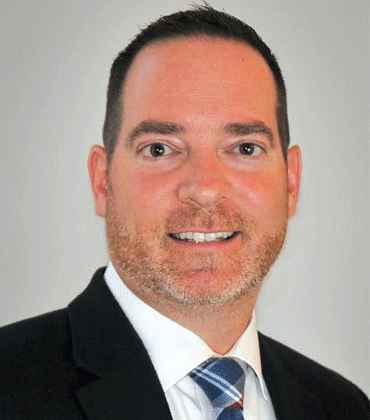
Currently, playing a prominent role in the human resources department, one of my main focus areas is the Human Resource Information Systems (HRIS) team, which works in collaboration with our central IT organization. After over 15 years working directly in the IT organization, my current role located in a business area delivers a perspective from ‘the other side’. Being a customer of what I provided in the past is cause for reflection and motivation for progress.
Over the years, my aim has always been to form and maintain a service-focused organization whether in IT or a business area. The major changes noticed in IT orbit around metrics and what should be measured. It is a commonly known fact that what gets measured gets attention, and therefore we strive to measure what matters most.
The ability of IT services to meet business needs should be the focal point. While being asked to do more with less, it is crucial to understand whether the IT services are valuable to the business and why. The earlier practice of measuring uptime has gradually lost focus, and now the emphasis is on whether IT is able to successfully provide what the business requires. These new measures include indicators aligned to business outcomes and what is valuable to the business—as defined by the business. This mindset helps break the habit of IT for IT sake or delivering services IT thinks the business needs.
IT today acts as an enabler for the business. It is important to understand that the money set aside for IT will often be insufficient; therefore, it is important to select the solutions which are the best fit for the organization’s requirements while maintaining consideration of efficiency and effectiveness.
Challenges Faced by Organizations with the Changing Pace of IT
With data being touted as the next great frontier, we often hear “It’s all about the data.” We know metrics are crucial, but they are only as good as data that reaches the system.
The earlier practice of measuring uptime has gradually lost focus, and now the emphasis is on whether IT is able to successfully provide what the business requires
This data is generated through business operations, and this brings the spotlight on the business processes, which are being performed with the aid of technology and automation. Workflow automation enabled by technology, provides organizations with more control over the processes and data captured. Reliance on data audits and other wasteful ‘Inspect and correct’ work will be reduced with better input validation and policy adherence. Automated processes reduce the error-prone nature of manual efforts and provide accurate source data to drive business decision support.
Automating Processes
For business areas heavily driven by an enterprise administrative system, having a strong partnership with the central IT organization is essential. Beyond traditional application development, our central IT organization has helped us with FTP based file transfer, integration and data sharing between systems, access and security management, real-time data feeds and much more. They created an integration hub where disparate systems could plug in and communicate.
Latest Trends for Organizations to Adapt
It is safe to say that our organization embraces feedback, measurement, and continual improvement. Over the last decade, many improvements have been realized with the use of management best practices such as described in ITIL, ISO, and others. There is a clear benefit to learn from others and leverage tried and true concepts to further the organization. However, navigating the ever changing world of frameworks and practices can be overwhelming.
With the emergence of Lean, Agile, DevOps, and the recent announcement that ITIL would be updated to incorporate those frameworks, it can be challenging to discern what of this guidance is right for the organization. Still newer frameworks like SIAM and VeriSM offer even more ways to think about IT Services and how they are delivered and managed. Sometimes, just finding the time to learn enough about these topics so proper consideration can be given is the largest of all challenges.
Withstanding Security Breaches
It is a common phrase in the industry that if you haven’t had a security incident then you haven’t discovered it yet. Currently, the security landscape is changing drastically and rapidly, therefore it is a requirement to maintain urgency and keep a close eye on security trends. Security and risk assessment is woven in to any new, changing, or renewed solution from enterprise applications to desktop management. The biggest challenge is to ensure balance and perspective. All too often, security takes center stage and unilaterally drives decisions. Information risk is very important and ever changing. Much work goes into remaining diligent and trying to plug any hole before the bad guys take advantage and the organization lands in the news. Still, we must ensure that the same level of attention is placed on business value. Remaining out of the news is not the only thing valuable to the business. In fact, it’s just assumed. From the business perspective, I am more concerned with a valuable, fit for purpose solution that delivers the outcomes needed. Being secure is a given and it doesn’t help drive business forward to have a super secure solution that doesn’t do what the business needs. Finding the right balance between risk mitigation and acceptance is critical and a major area of partnership with business and IT/Risk teams.

